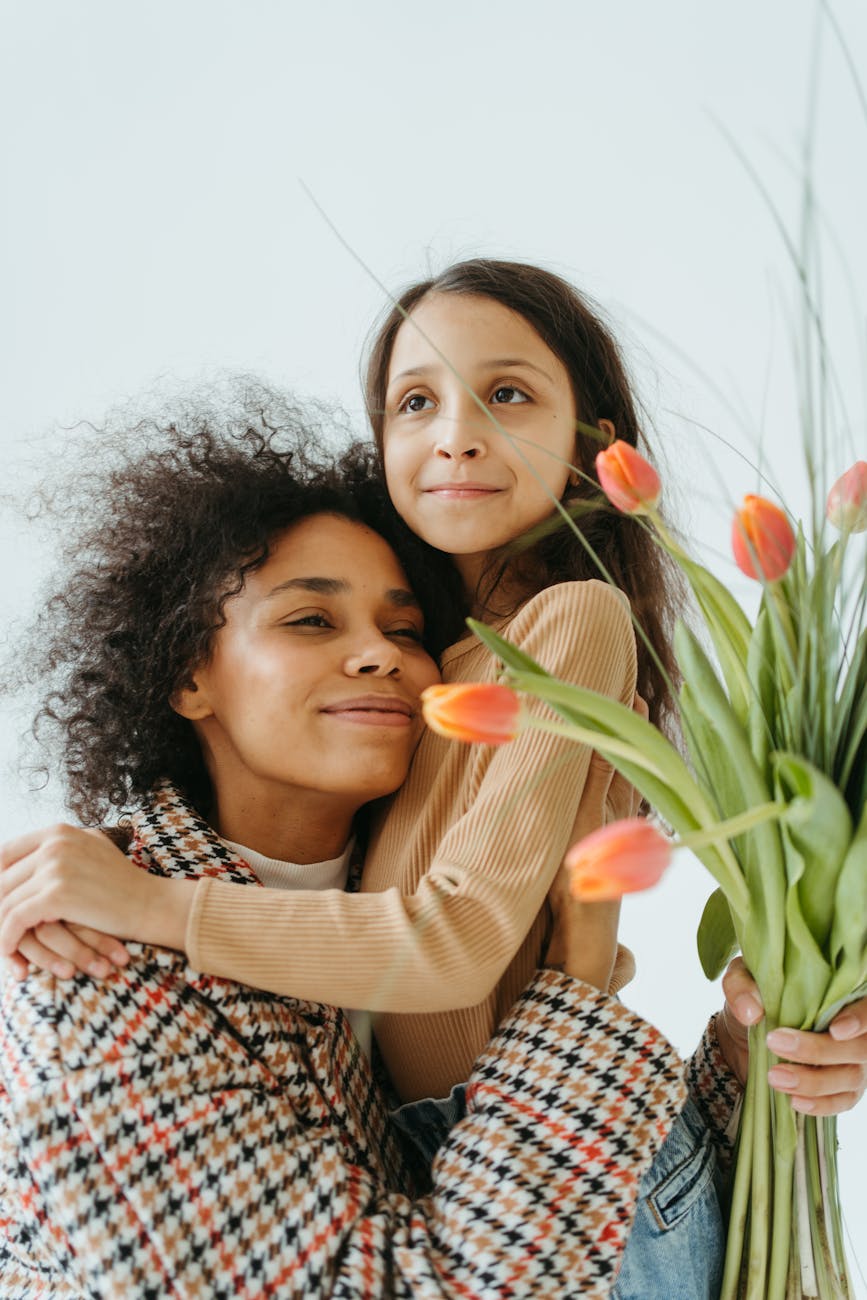

“I feel close to her… but not safe with her”
This is one of the hardest experiences to explain.
You may talk to your mother regularly.
You may feel connected in some ways.
You may even care deeply about her well-being.
And yet—
There’s a part of you that feels:
- guarded
- misunderstood
- emotionally distant
- unable to fully be yourself
So the question becomes:
“Why does this relationship feel both close and difficult at the same time?”
What is the mother wound in South Asian families?
The mother wound in South Asian families often refers to a complex relational pattern where:
- care and control coexist
- love and criticism are intertwined
- closeness exists without emotional safety
It doesn’t always look like rejection.
Sometimes it looks like:
- constant advice or correction
- comparison with others
- emotional inconsistency
- guilt when you create distance
So instead of feeling fully supported, you may feel:
👉 both connected and constrained
If this is you, it might sound like:
- “I feel guilty needing space from her”
- “I can’t fully open up to her”
- “She cares, but she doesn’t really understand me”
- “I feel judged even when she’s trying to help”
- “I don’t know how to set boundaries without feeling bad”
The mother wound in South Asian families is often subtle.
Which makes it harder to name.
Where this pattern comes from
This dynamic doesn’t develop in isolation.
Many mothers were shaped by environments where:
- emotional expression was limited
- obedience and roles were emphasized
- personal needs were deprioritized
- autonomy was restricted
So instead of learning how to:
- validate emotions
- support individuality
- hold space without control
They learned how to:
- guide
- correct
- manage
- protect
In the ways they knew how.
The intergenerational layer
Your mother may have experienced:
- emotional neglect herself
- pressure to conform to roles
- lack of emotional support
- limited ability to express vulnerability
She may not have had:
- space to develop emotional awareness
- permission to prioritize her own needs
- models of emotionally safe relationships
So what gets passed down is not just behavior.
It’s a relational blueprint.
Love and control can coexist
This is where it gets complicated.
Because many people think:
👉 “If she loved me, it wouldn’t feel this way”
But in reality:
👉 love and emotional limitation can exist together
Your mother may:
- care deeply
- want the best for you
- try to stay involved
And still:
- struggle to validate your experience
- respond with criticism instead of understanding
- rely on control to manage her own anxiety
Why it feels so emotionally charged
Because this is not just any relationship.
It’s one of the earliest and most formative ones.
So when there’s:
- inconsistency
- emotional distance
- lack of safety
It impacts:
- how you relate to yourself
- how you experience closeness
- how you navigate boundaries
A pattern I often see
Many adults say:
“I don’t know how to be myself around her.”
Or:
“I feel like I go back to being a different version of myself.”
That happens when the relationship doesn’t fully allow for your current identity.
The connection to guilt
The mother wound in South Asian families is often deeply tied to guilt.
Because you may feel:
- responsible for her emotions
- aware of her struggles
- connected to her sacrifices
So creating distance can feel like:
👉 doing something wrong
Even when you need it.
The connection to resentment
At the same time, you may feel:
- frustrated
- misunderstood
- emotionally unsupported
Not because you don’t care.
But because:
👉 your needs haven’t been fully met
So resentment builds quietly.
Often alongside guilt.
(You may also relate to: “Guilt and Resentment Toward Your Parents.”)
A different way to understand this
Instead of asking:
“Why is my relationship with my mother so complicated?”
It may be more accurate to ask:
“What emotional needs were not fully supported in this relationship?”
That question allows for:
- clarity
- nuance
- compassion
Without dismissing your experience.
What actually helps
Not trying to “fix” the relationship immediately.
But starting with:
- recognizing your emotional experience without minimizing it
- separating your needs from your mother’s expectations
- allowing space for both care and boundaries
- understanding that distance can be protective, not harmful
Redefining what closeness means
Closeness doesn’t have to mean:
👉 full emotional access
It can look like:
- selective sharing
- clear boundaries
- realistic expectations
This creates a form of connection that is more sustainable.
Therapy can support this process
Because this is not just about communication.
It’s about:
- early relational experiences
- identity
- emotional safety
- internalized guilt and responsibility
Therapy can help you:
- understand the mother wound in South Asian families
- process complex emotions like guilt and resentment
- build boundaries without losing yourself
- develop a more stable sense of self
(You may also relate to: “Emotional Neglect in South Asian Families” and “The Good Child Trauma Response.”)
A note for adults across Ontario
Many adults across Ontario begin to recognize these patterns when they feel both connected to and emotionally impacted by their relationship with their mother.
If this resonates, it’s not something you’re imagining.
It’s something that can be understood—with nuance.
FAQ
What is the mother wound?
The mother wound refers to the emotional impact of a complex or inconsistent relationship with one’s mother.
Can you love your mother and still feel hurt?
Yes. Love and emotional pain can coexist in the same relationship.
Why do I feel guilty setting boundaries with my mother?
Because many people are conditioned to prioritize their mother’s needs and emotions over their own.
You may also relate to:
- Guilt and Resentment Toward Your Parents
- Emotional Neglect in South Asian Families
- The Good Child Trauma Response
- People-Pleasing as a Survival Pattern
Understanding where these patterns came from is not about blaming your parents. It’s about understanding their impact so you can decide what you want to carry forward—and what you don’t.
If you’re reading this and thinking, “This is exactly what I’ve been feeling, but I’ve never had the words for it,” that’s often where the work begins.
Many of the adults I work with across Ontario spent years functioning well on the outside while feeling disconnected, exhausted, guilty, or emotionally stuck underneath it all.
If you’d like support making sense of these patterns, you can reach out here:
Leave a Reply