Introduction
ADHD is often associated with visible traits such as difficulty sustaining attention, hyperactivity, and impulsivity. These are the characteristics most people recognize because they are easier to observe.
However, for many South Asian adults, ADHD is far more complex than what appears on the surface.
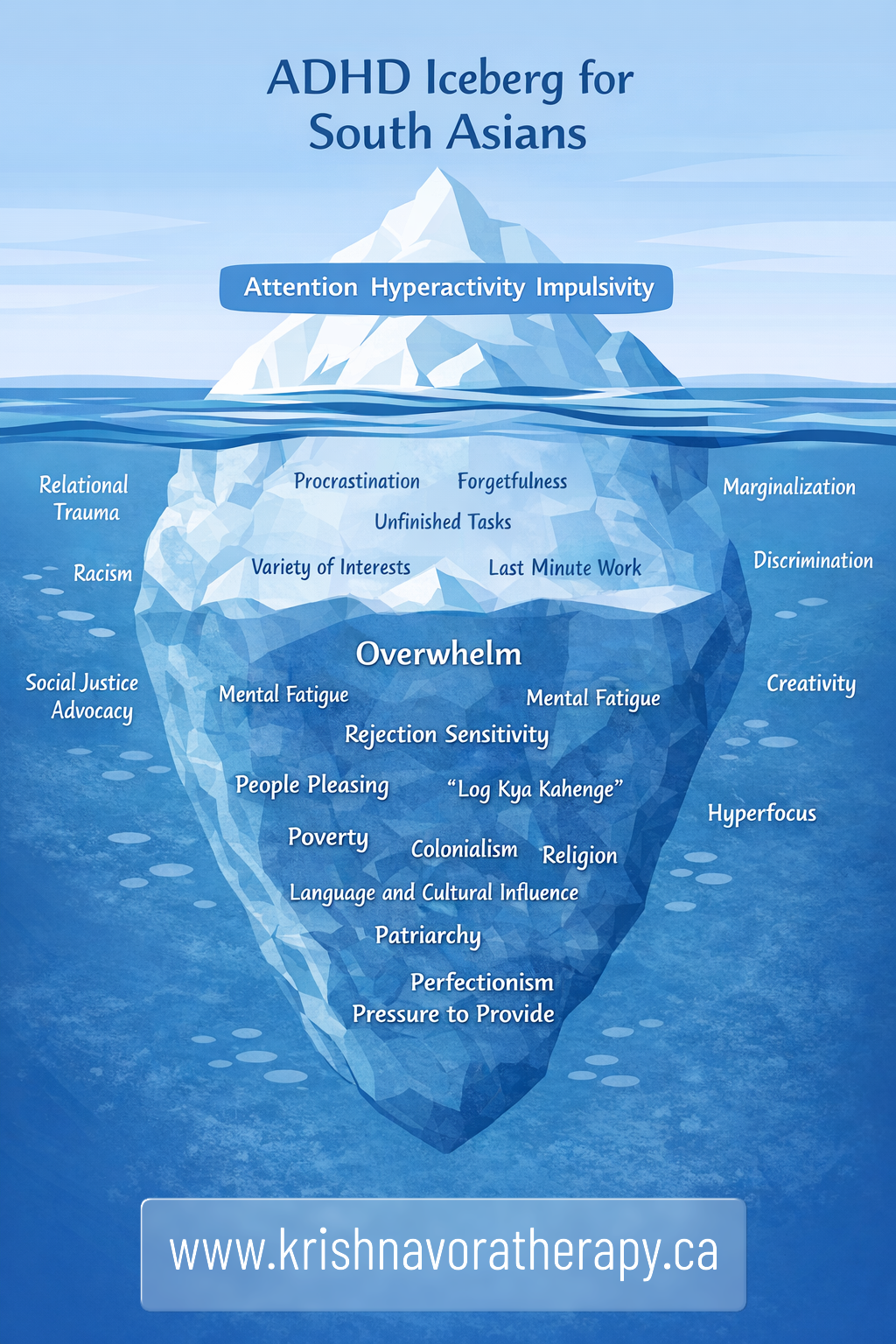
The iceberg model is a helpful way to understand how ADHD can involve layers of internal experiences, cultural expectations, and social influences that may not be immediately visible.
What People Often See
When ADHD is discussed, the focus is typically on observable traits such as:
- Attention difficulties
- Hyperactivity
- Impulsivity
These are the characteristics most commonly associated with ADHD in clinical descriptions and public understanding.
However, these visible traits represent only a small portion of the overall experience.
What Lies Beneath the Surface
Many adults with ADHD experience patterns that are less visible but deeply impactful. These may include:
- procrastination
- forgetfulness
- unfinished tasks
- multiple hobbies or shifting interests
- last-minute work patterns
- overwhelm
- mental fatigue
- rejection sensitivity
- people pleasing
These experiences can affect daily functioning, self-esteem, and stress levels.
Cultural Influences in South Asian Communities
For South Asian adults, ADHD experiences may also intersect with cultural expectations and systemic factors.
Examples include:
- academic pressure
- family expectations
- “log kya kahenge” (concern about social reputation)
- comparison culture
- stigma surrounding mental health
- perfectionism
- intergenerational patterns
- financial stress or poverty
- language and migration experiences
- religion and cultural identity
These factors can shape how ADHD symptoms are interpreted or addressed within families and communities.
Why ADHD May Be Diagnosed Later
Because ADHD can be masked by cultural expectations or coping strategies, many South Asian adults may not recognize ADHD patterns until later in life.
Some individuals learn to compensate through high effort, perfectionism, or people-pleasing behaviours.
Others may interpret their challenges as personal shortcomings rather than neurodevelopmental differences.
Understanding the broader context of ADHD can help shift the conversation away from self-blame and toward awareness.
Increasing Awareness
The ADHD iceberg model highlights the importance of looking beyond surface-level behaviours.
When cultural and contextual factors are considered, it becomes easier to understand why ADHD may go unrecognized for many South Asian adults.
Increasing awareness within communities can help reduce stigma and support more informed conversations about mental health and neurodiversity.
Learn More
For more resources related to ADHD in South Asian adults and neurodiversity-affirming mental health support, visit:
 Krishna Vora Therapy
Leave a comment